
A hot water system leaking water usually comes down to one of two things. Either the relief valve is letting off pressure the way it was designed to, or the tank itself has started to rust through. The first is often a quick valve swap. The second means the unit is on borrowed time.
This guide is for Gold Coast homeowners who’ve just found a puddle under the tank and want to know how worried to be.
We handle hot water system repairs and replacements across the Gold Coast, and every job starts the same way: find exactly where the water is coming from.
Find where the leak is coming from first
Grab a torch. Dry the area with an old towel, wait ten minutes, then check where fresh water shows up.
- Relief valve drain pipe. This is the copper line running from the valve near the top of the tank down to the ground or a tundish. Drips here are common and often normal.
- Pipe joints and valves. Check the brass unions, the cold water isolation valve and the tempering valve. Green crusting or a steady bead of water at a joint gives it away.
- Base of the tank. Water pooling under the unit or seeping out from under the outer jacket is the one we worry about.
- Heat pump condensate line. Heat pumps create condensation as they run, so a small, clear trickle from the condensate hose is expected.
Relief valve drip vs a leaking tank
When the relief valve is dripping
Every storage hot water system has a temperature and pressure relief valve, which plumbers call the PTR valve. It sits near the top of the tank with a small lever on it. As water heats up it expands, and the valve lets a little out so pressure inside the tank stays at a safe level.
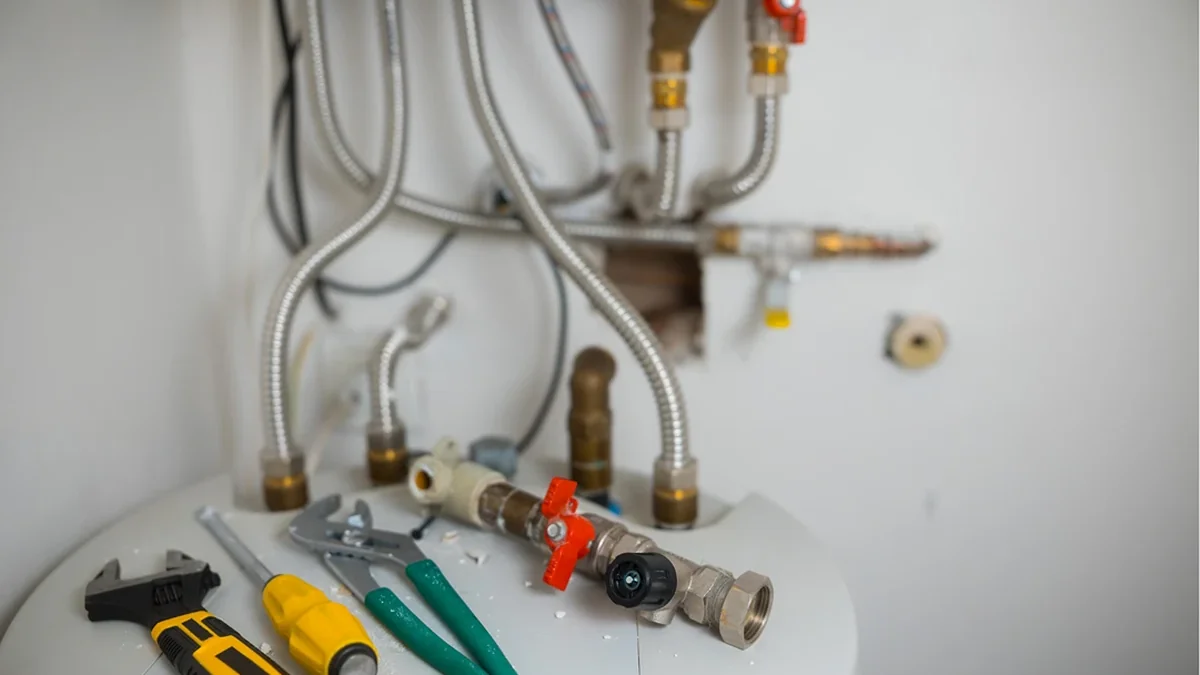
A few drips a day while the system is heating is normal. On electric off-peak units, it usually shows up overnight.
A steady stream is a different story. That usually points to a worn valve seat or mains pressure running higher than the tank can handle.
The Australian plumbing standard (AS/NZS 3500) caps water supply at 500 kPa for new installations, and a home without a pressure limiting valve can sit above that, which wears the relief valve out early. Replacing the valve and adding a pressure limiting valve sorts most of these jobs out.
One thing never to do: block or cap the relief valve drain to stop the drip. That valve is the only thing stopping an overheated tank from building dangerous pressure.
When the tank itself is leaking
Water coming from the base of the unit, or seeping out from under the outer casing, is almost always the inner tank. Storage tanks have an enamel lining and a sacrificial anode rod that corrodes so the steel does not.
Once the anode is eaten away, the tank starts rusting from the inside. By the time water shows, the steel has rusted right through. Look for rust streaks down the jacket or a flaky orange crust on the slab under the unit.
There’s no patch for a rusted tank. Sealant won’t hold under mains pressure and heat, so the unit needs replacing.
What to do straight away if your hot water system is leaking
- Turn off the power or gas. For electric systems, switch off the circuit marked hot water at the switchboard. Plenty of Gold Coast homes run hot water on a separate off-peak circuit, so read the labels. For gas, turn the control knob on the unit to off.
- Close the cold water isolation valve. It’s the tap-style valve on the cold pipe feeding into the tank, usually low on one side. Turn it clockwise until it stops. If it’s seized solid, turn the water off at the meter instead.
- Keep clear of the relief valve. Water stored in the tank sits above 60°C and can scald. Don’t lift the lever on a leaking system.
- Protect the floor and walls. Put down towels or a bucket and move anything valuable. Units inside a laundry or garage can soak plasterboard and carpet quickly.
The tank stays hot for hours after shutdown, so leave draining it to a plumber.
Is a leaking hot water system an emergency?
Sometimes. A slow drip from the relief valve drain outside isn’t an emergency, so you can book a standard visit and keep using hot water in the meantime. Water coming from the tank, a spraying fitting or water near wiring is urgent, and the system needs shutting off straight away.
Treat it as urgent if you notice any of these:
- Water pouring or spraying from the tank or a fitting
- A leak from the base of an indoor unit
- Water reaching the power point, isolator switch or any wiring near the system
- A gas smell around a gas hot water unit (leave the area and call from outside)
- Steam or near-boiling water pushing out of the relief valve
In any of those cases, shut everything off and book 24/7 emergency plumbing on the Gold Coast.
Should you repair or replace a leaking hot water system?
Repair it if the leak is coming from a valve or a fitting. Replace it if the water is coming from the tank itself, because a rusted tank can’t be fixed. Age matters too. A storage unit past about 10 years old that starts leaking is usually better replaced than patched.
Usually worth repairing:
- A dripping or faulty PTR valve
- A leaking union, isolation valve or drain cock
- A tempering valve that has failed
- High mains pressure, fixed by fitting a pressure limiting valve
Time to replace:
- Any leak coming from the tank itself
- Heavy rust on the jacket, base or fittings
- A storage unit that is more than 10 years old and starting to give trouble
- A system that has needed several repairs in a short stretch
Replacing a hot water heater in Queensland is regulated plumbing work. The Queensland Government lists it as notifiable work that must be carried out by a licensed plumber, and the plumber lodges the paperwork with the QBCC once the job is finished. New installs also need a tempering valve so hot water reaches bathroom taps at a safer temperature.
A replacement is also a good time to rethink the type of system. Our guide to choosing between gas and electric hot water for a Gold Coast home compares running costs and install requirements.
How we handle a leaking hot water system
We find the source, check the valves and mains pressure, and give you an itemised quote before any work starts. If the tank has gone, we talk through replacement options on the spot.
SEQ Plumbing & Roofing is QBCC licensed (licence 135460899), and our plumbers have more than 10 years on the tools across the Gold Coast, from Southport and Helensvale down to Palm Beach and Currumbin.
Hot water system leaking FAQs
How long will a hot water system last once it starts leaking?
If the tank is leaking, plan to replace it now. A rusted tank can seep slowly for a few weeks or split open without warning, with no way to tell which. A relief valve drip is different. That’s a valve fault, not a tank fault, and the system can run for years once the valve is replaced.
Can I still shower if my hot water system is leaking?
Yes, if the only leak is a slow drip from the relief valve drain. No, if water is coming from the tank or a fitting is spraying. Shut off the power or gas and the cold water isolation valve, because running a failing tank keeps it under pressure and makes the leak worse.
Why is my hot water system leaking from the bottom?
Water at the bottom of a hot water system usually means the inner tank has rusted through. Check two other spots before assuming the worst. The relief valve drain often finishes near the base, so a normal drip can look like a tank leak. The drain cock at the bottom of the tank can also weep once its washer perishes.
A dripping relief valve is a small job, but a leaking tank isn’t one to leave sitting. If you’re not sure which one you have, call 0451 082 362 for a free quote and we’ll come and take a look.
